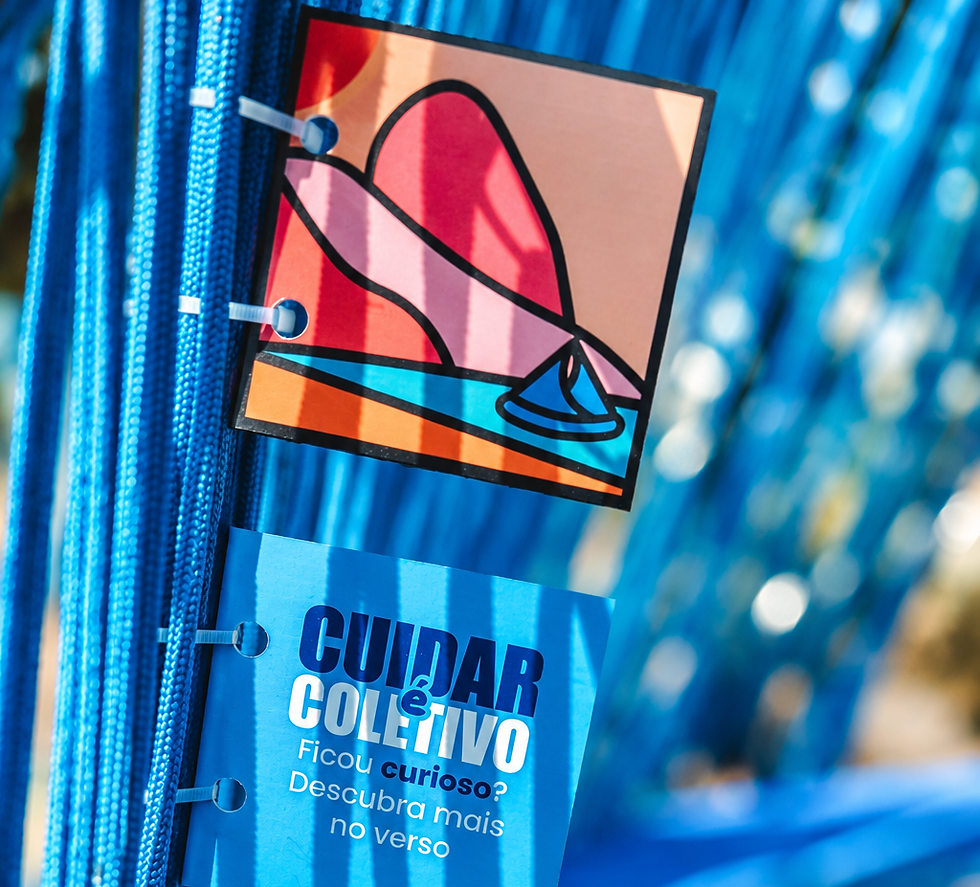
Rio de Janeiro (RJ)
RESULTS
SANTUÁRIO MARINHO DA PAISAGEM CARIOCA • PRAIA VERMELHA
A NOTE ON THE DATA
The results presented on this page reflect the most recent consolidation of operational data. As new analyses are completed and the dataset is updated, some indicators may vary from figures shared in previous versions.
July – November 2025 · 1 Caravela · 35 days of operation
Data updated in October 2026.
AN ICONIC LANDMARK.
ONE CARAVELA.
ONE MARINE SANCTUARY.
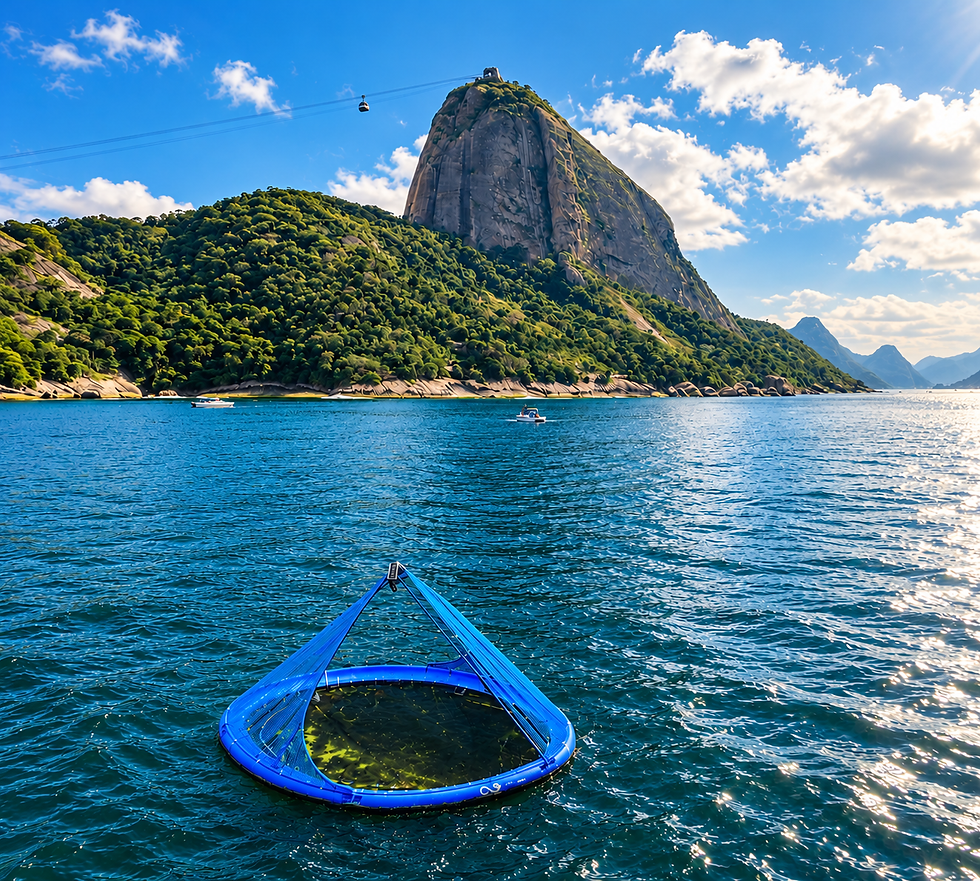
In one of Rio de Janeiro's most iconic landscapes, the Caravela began operating in a territory where the beauty we see from the shore
is only part of the story.
Throughout the operation, biomass, biodiversity, and environmental analyses revealed different layers of a remarkably vibrant ecosystem.
Here are some of the results of this experience.
BEFORE THE NUMBERS,
THE TERRITORY.
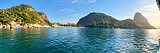
Between Sugarloaf Mountain, the rocky shores, and the Atlantic,
Praia Vermelha is part of one of Rio de Janeiro's most iconic landscapes.
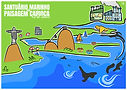
Located within the Santuário Marinho da Paisagem Carioca,
it is a place where nature, science, culture, and urban life come together.
But beneath the surface, there is a world of activity that the landscape does not always reveal.
Its waters are influenced by both Guanabara Bay and the Atlantic Ocean, creating an environment shaped by water circulation, biodiversity, and different human pressures.
Among algae, fish, and other marine organisms, life persists amid the environmental challenges of a densely populated coastal area.
It was here, where the city meets the ocean, that the Caravela began its journey, observing natural processes and revealing
new layers of a living ecosystem.
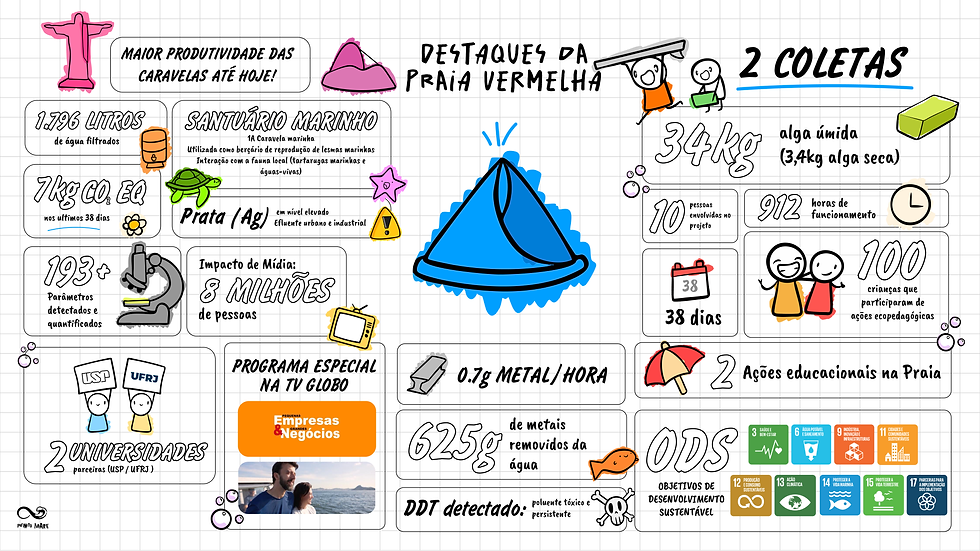
RESULTS AT A GLANCE
THE NUMBERS TELL PART OF THE STORY.
ENVIRONMENTAL CHARACTERIZATION
WATER CAN LOOK CLEAN.
AND STILL HOLD MANY STORIES
Praia Vermelha revealed that not everything present in the water
is visible in the landscape.
Analyses conducted throughout the operation investigated different classes of compounds, deepening our understanding of this marine environment.
Metals. Nutrients. Hydrocarbons.
Pesticides. PCBs. Fecal sterols.
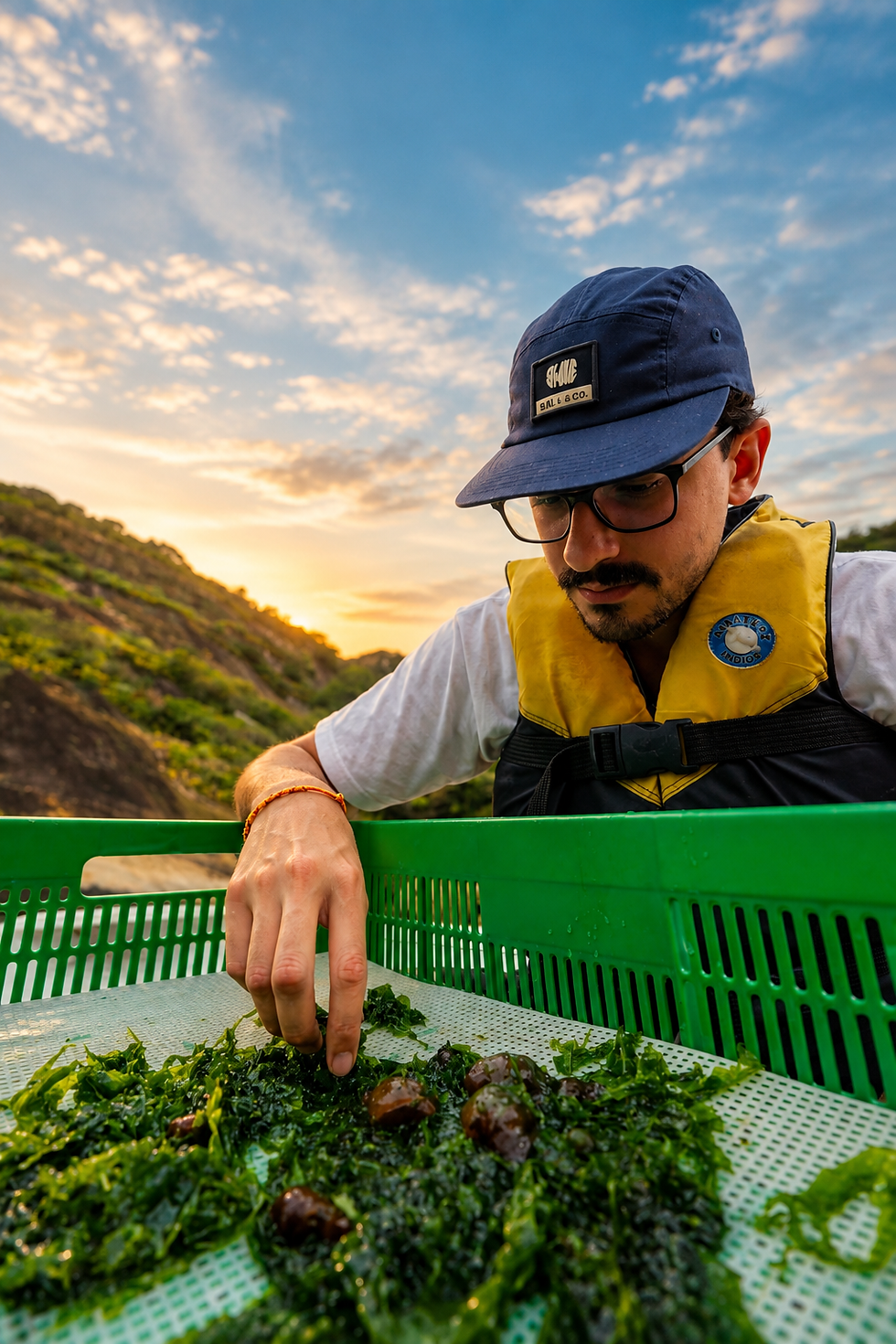
Analyzing the biomass produced by the Caravela
made it possible to identify elements and compounds
present in the environment, turning biological growth
itself into a new layer of understanding of these waters.
PERSISTENT POLLUTANTS
SOME TRACES
REMAIN
FOR DECADES.
DDT DETECTED IN THE ANALYSES
DDT is a persistent organic pollutant, belonging to a class of compounds known
for their long persistence in the environment and slow degradation.
Even decades after restrictions on its use, residues can remain in ecosystems,
associated with sediments, water, and organisms.
At Praia Vermelha, its detection in the biomass added a temporal dimension
to the environmental characterization of this territory:
water carries more than traces of the present.
It can also hold traces of the past.
WHAT REMAINS UNSEEN IN THE LANDSCAPE
IS ALSO PART OF WATER'S STORY.
WHAT THE BIOMASS REVEALED
NOT EVERY ELEMENT
TELLS THE SAME STORY.
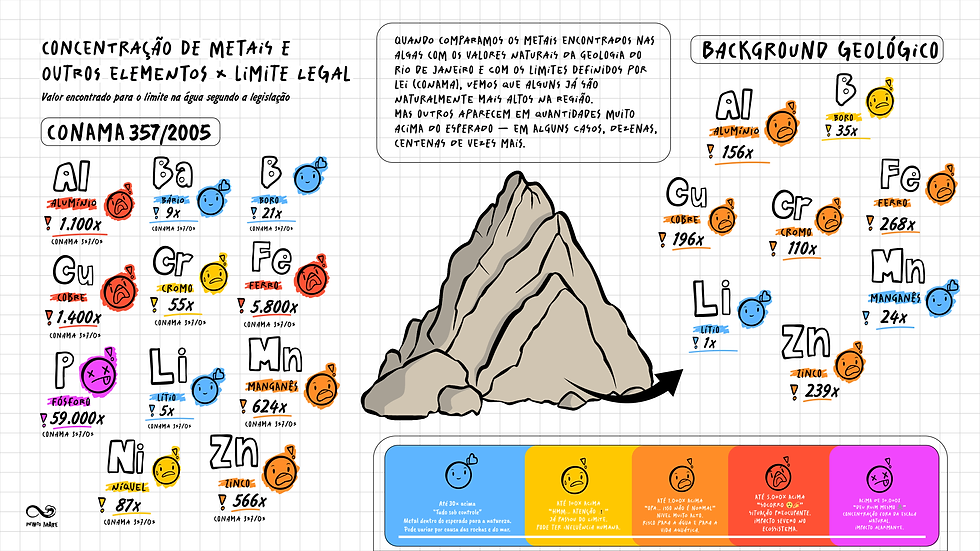
*Values represent the relationship between the concentrations identified in the biomass and the reference values used in the analysis. They do not represent concentrations measured directly in the water.
Some of the elements identified in the analyses may also be associated with the natural geological characteristics
of the Rio de Janeiro region.
That is why interpreting the results requires looking beyond reference values and considering the environmental
and geological context of each territory.
BIODIVERSITY
A SMALL SANCTUARY
WITHIN THE SANCTUARY.
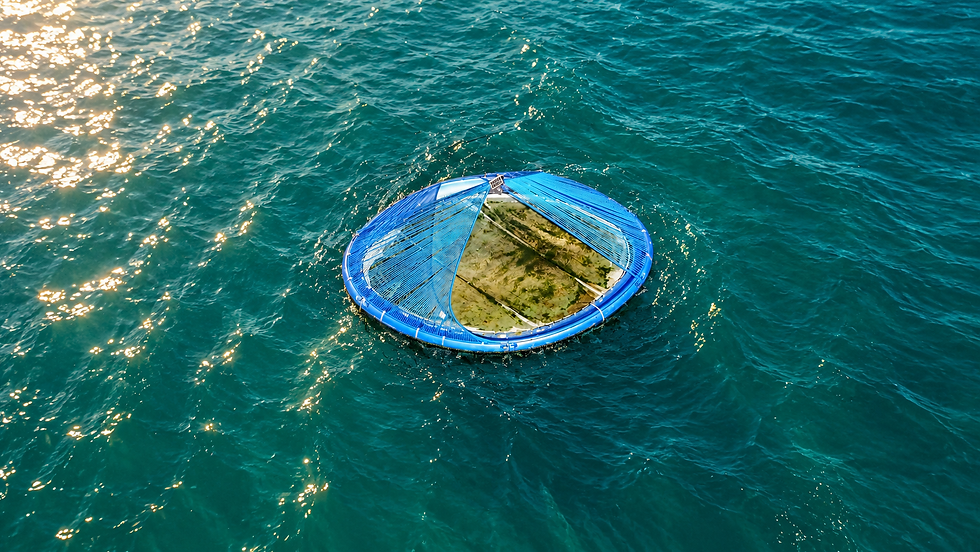
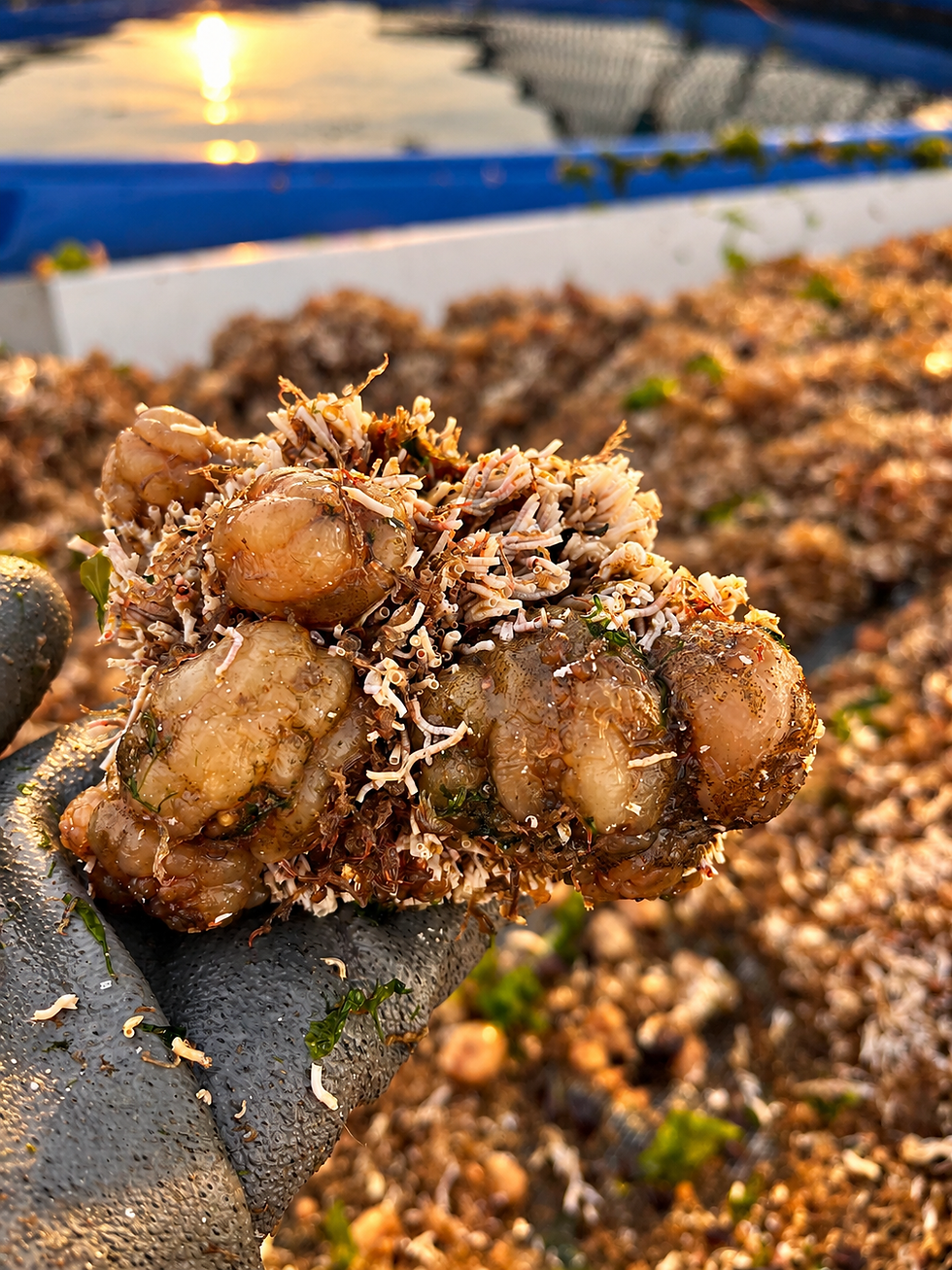
Throughout the operation, the Caravela became a new surface for interaction among organisms living in this ecosystem.
During field collections and observations, different forms of life were documented on, around, and interacting with the structure, including sea turtles, jellyfish, sea slugs, and communities of organisms associated with the Caravela itself.
These records were gathered through direct observation and photographic documentation.
They do not constitute a systematic survey of local biodiversity, but help reveal the ecological relationships that developed throughout the operation.
The Caravela did more than operate in these waters.
Life began interacting with it, too.
BIOLOGICAL PRODUCTIVITY
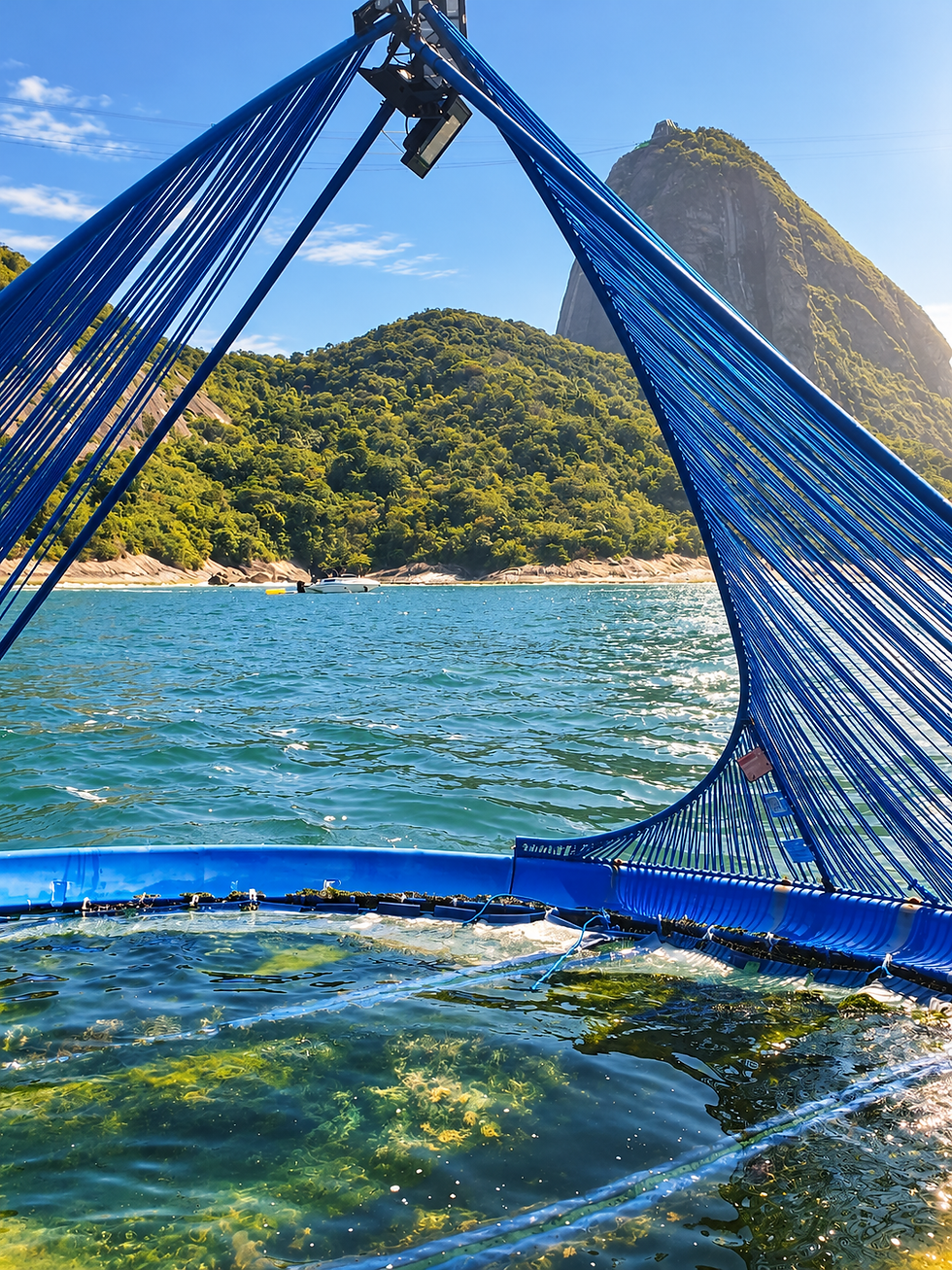
38 DAYS.
34 KG OF LIFE
GROWING.
34 KG OF WET BIOMASS
3.4 KG OF DRY BIOMASS
HIGHEST PRODUCTIVITY RECORDED BY THE CARAVELA UP TO THAT POINT
This result showed how the Caravela's response also varies according to the characteristics of each body of water.
Every territory produces a different biomass.
And every biomass tells a story about its ecosystem.


EDUCATION
THE SEA ALSO
BECAME A
CLASSROOM.
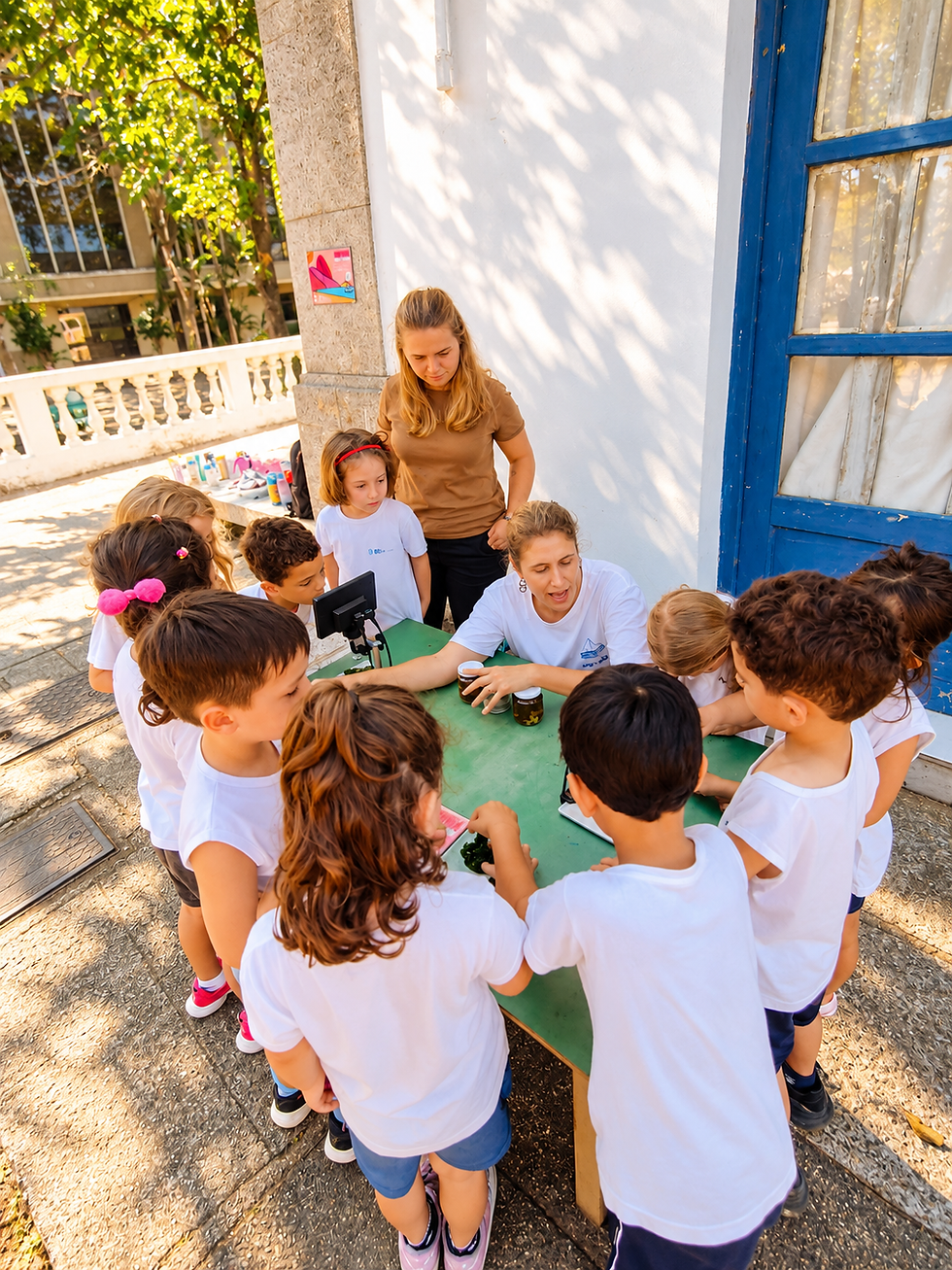
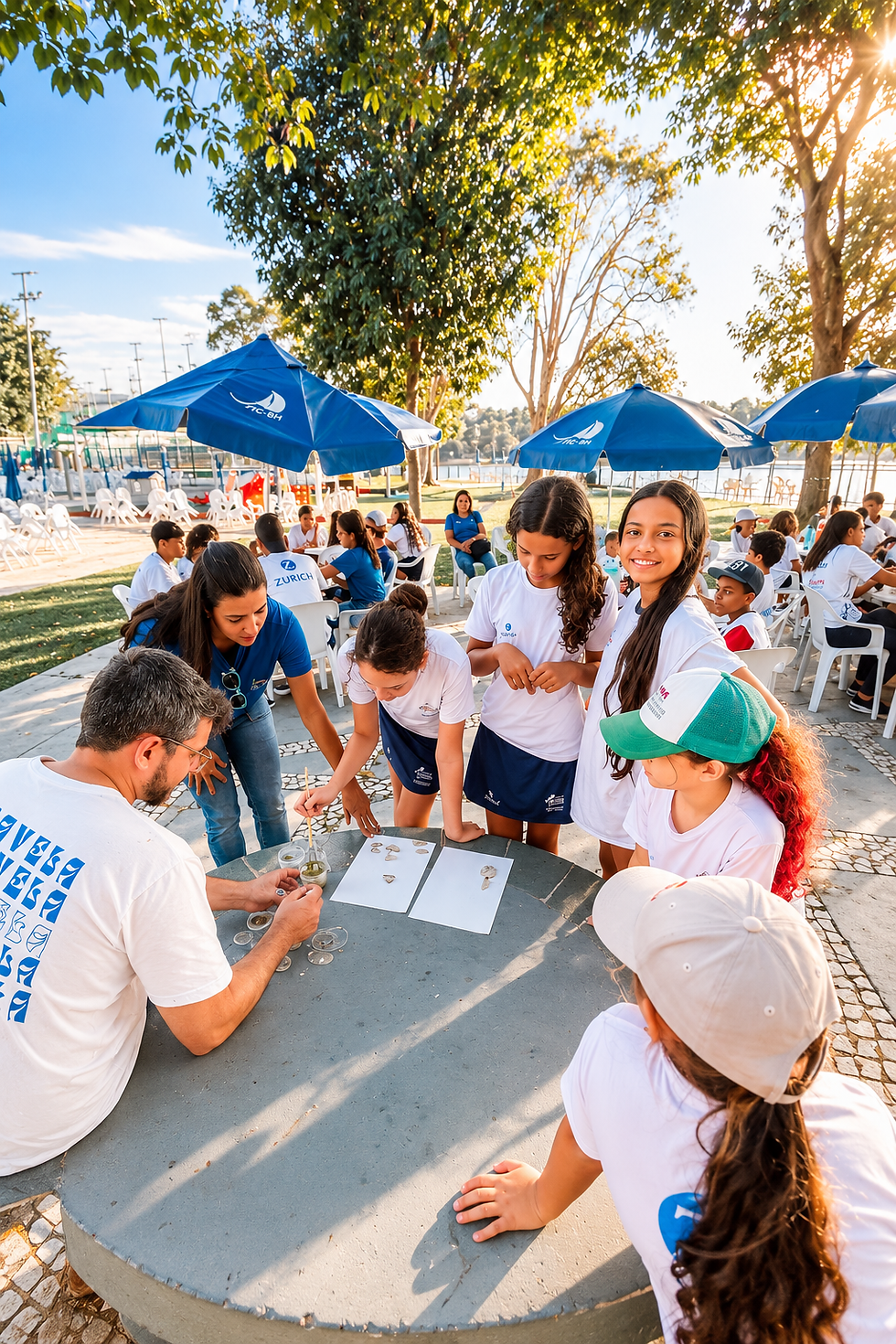
100 CHILDREN from four classes at Gabriela Mistral Municipal School
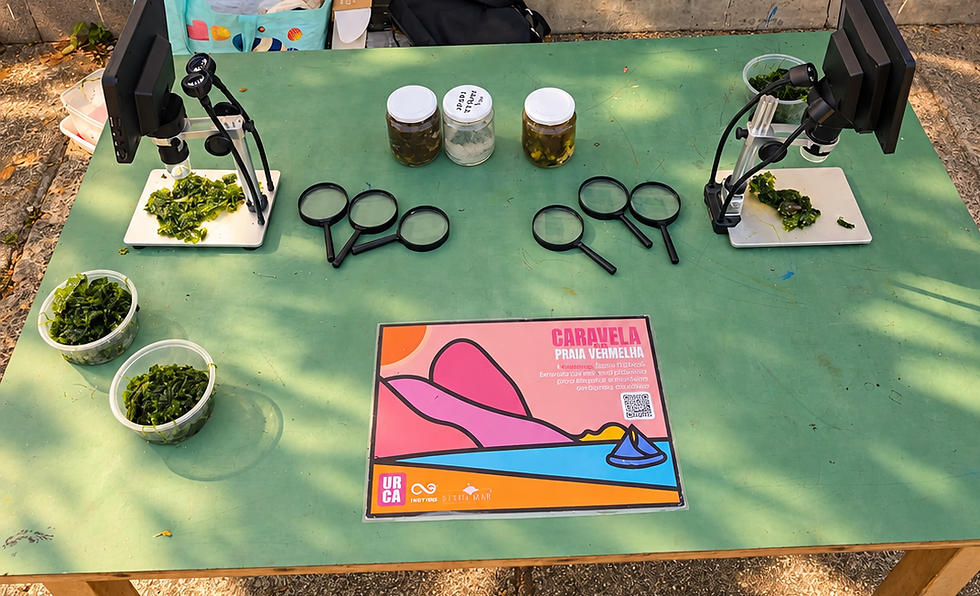
3 EDUCATIONAL AND AWARENESS-BUILDING ACTIVITIES with students, researchers, partner projects, and beachgoers
At Praia Vermelha, learning unfolded between the sand, the sea, and discovery.
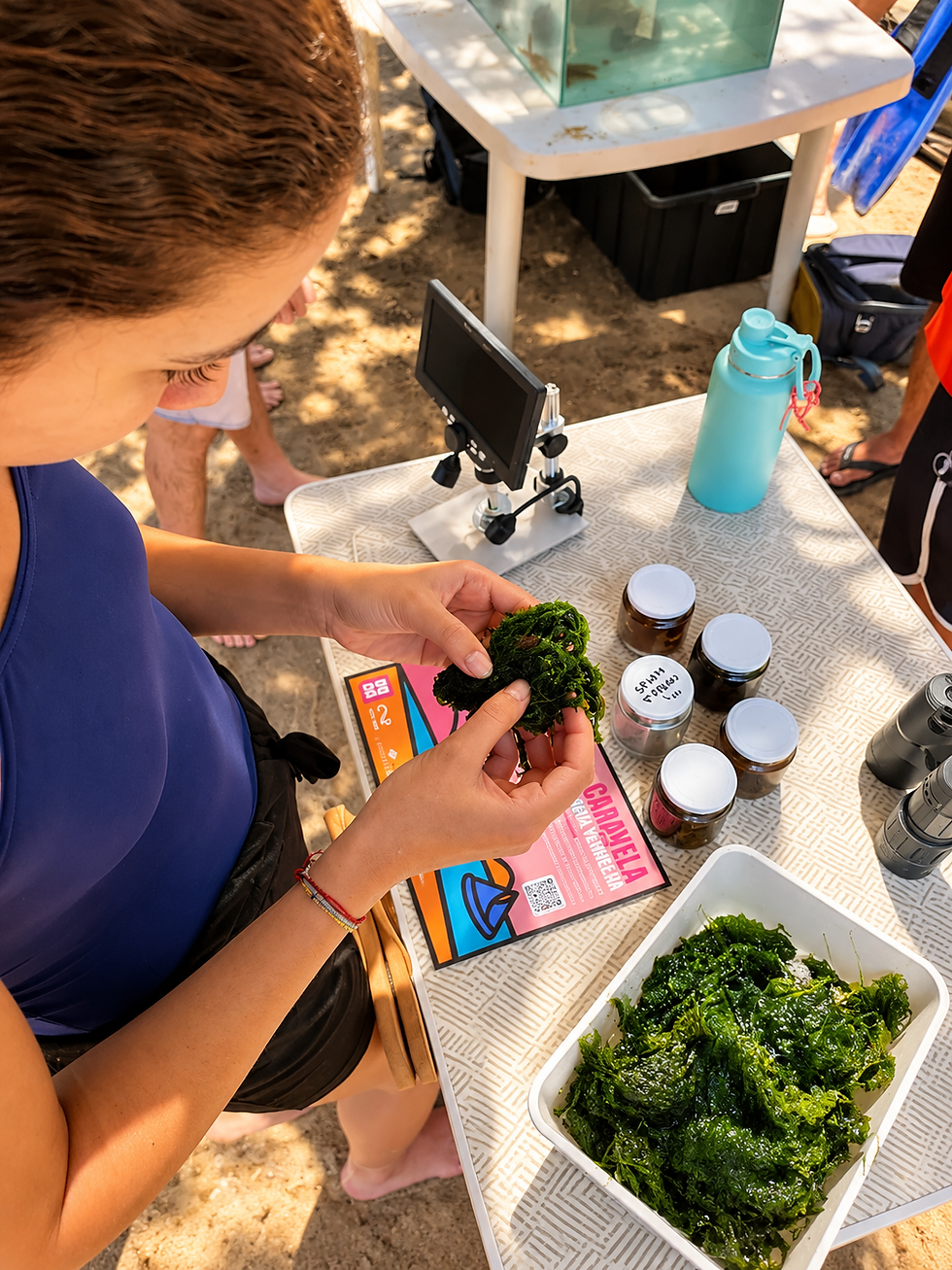
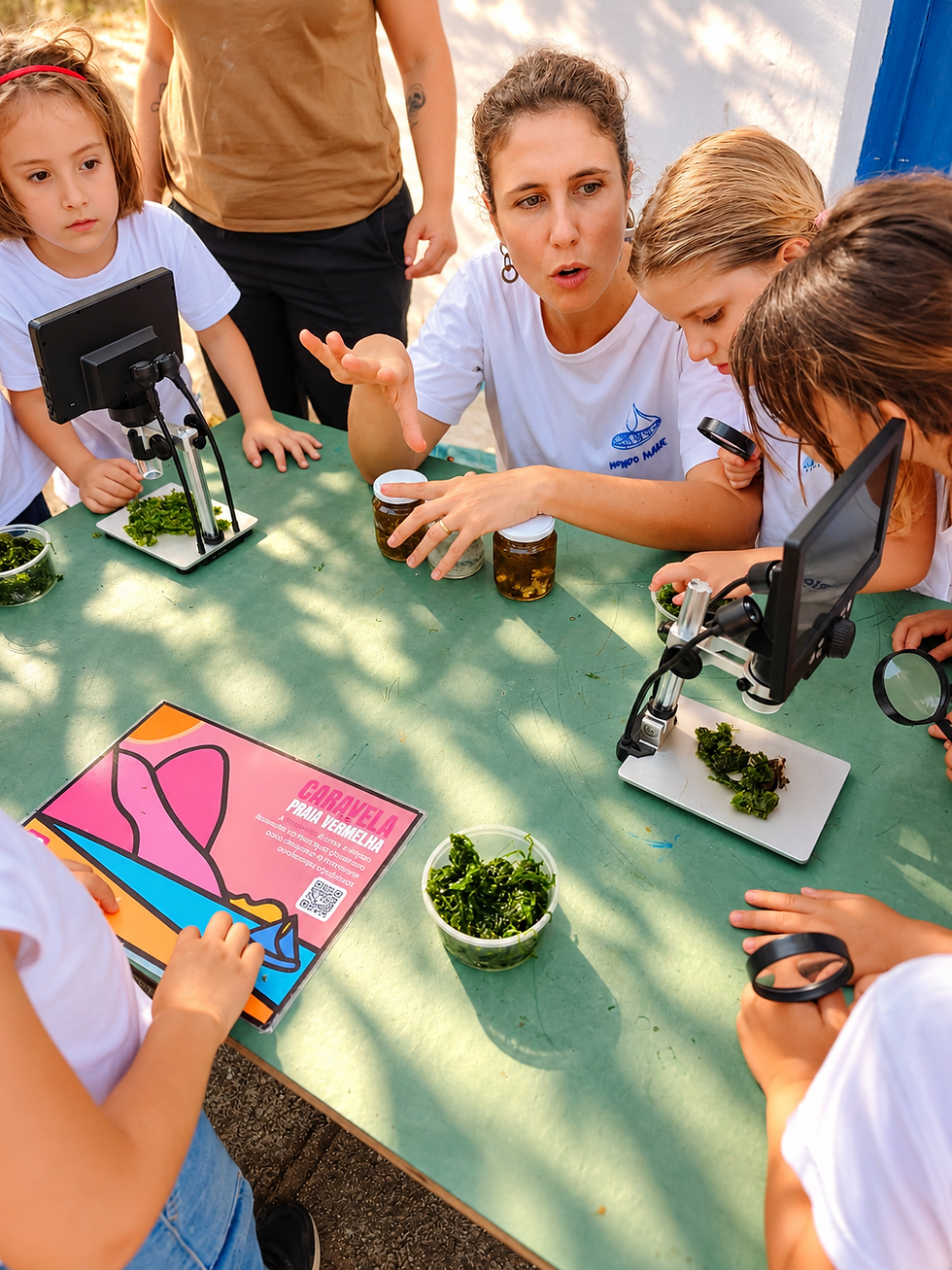
In partnership with Projeto Verde Mar, the Caravela brought children and visitors closer to marine biodiversity and the natural processes that help sustain life in the water.
Microscopes revealed almost invisible organisms.
Algae could be observed and touched.
And binoculars offered participants a closer look at the Caravela floating offshore.
FROM THE BEACH TO THE CLASSROOM.
FROM DISCOVERY TO CARE.
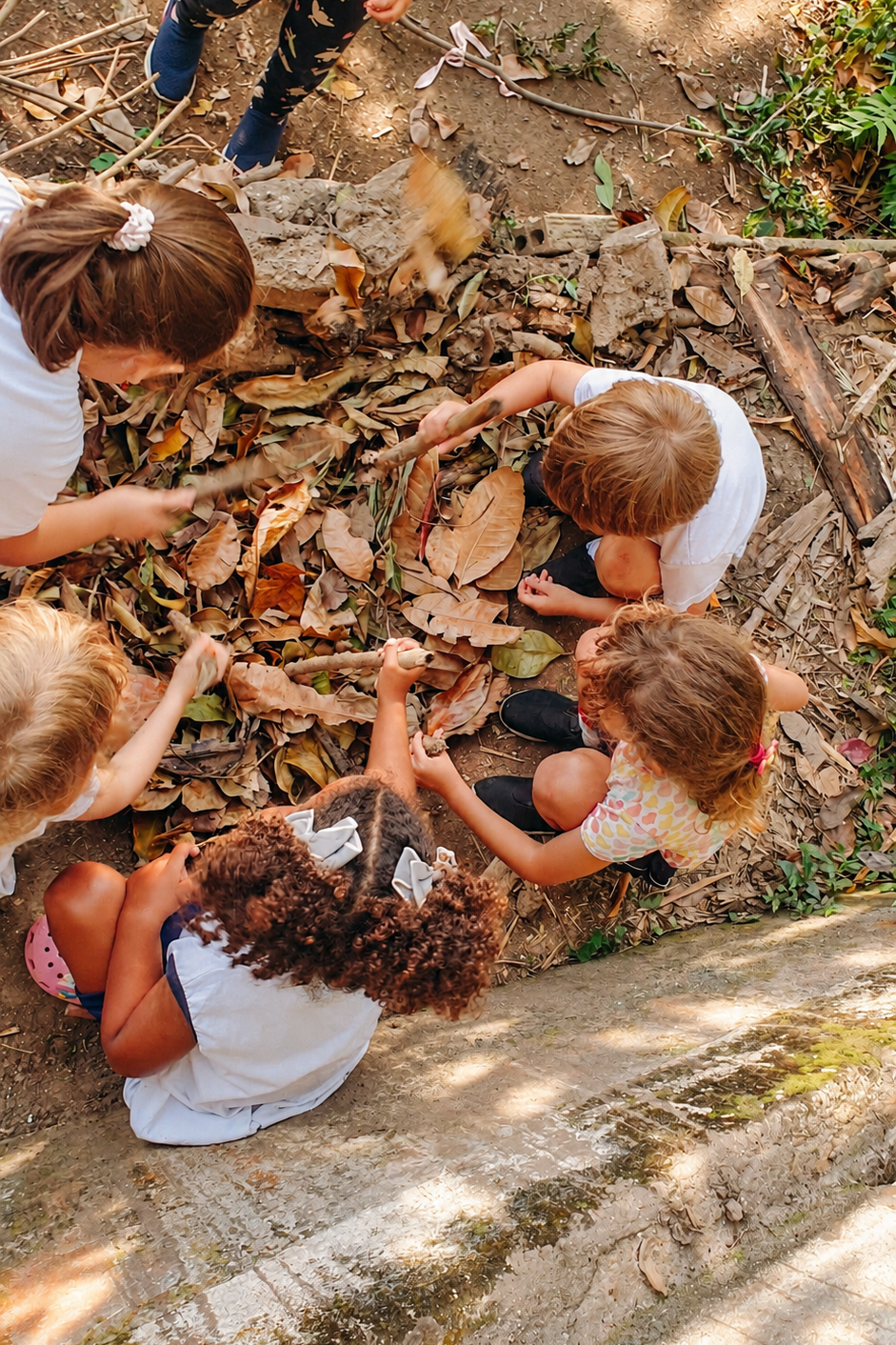
At the end of the activity with Gabriela Mistral School,
each class took a small amount of algae back to the school's own compost bin.
A simple gesture that transformed learning about nature's cycles into a hands-on experience of environmental care.
CIRCULARITY
WHAT CAME OUT OF THE WATER CONTINUED ITS CYCLE.
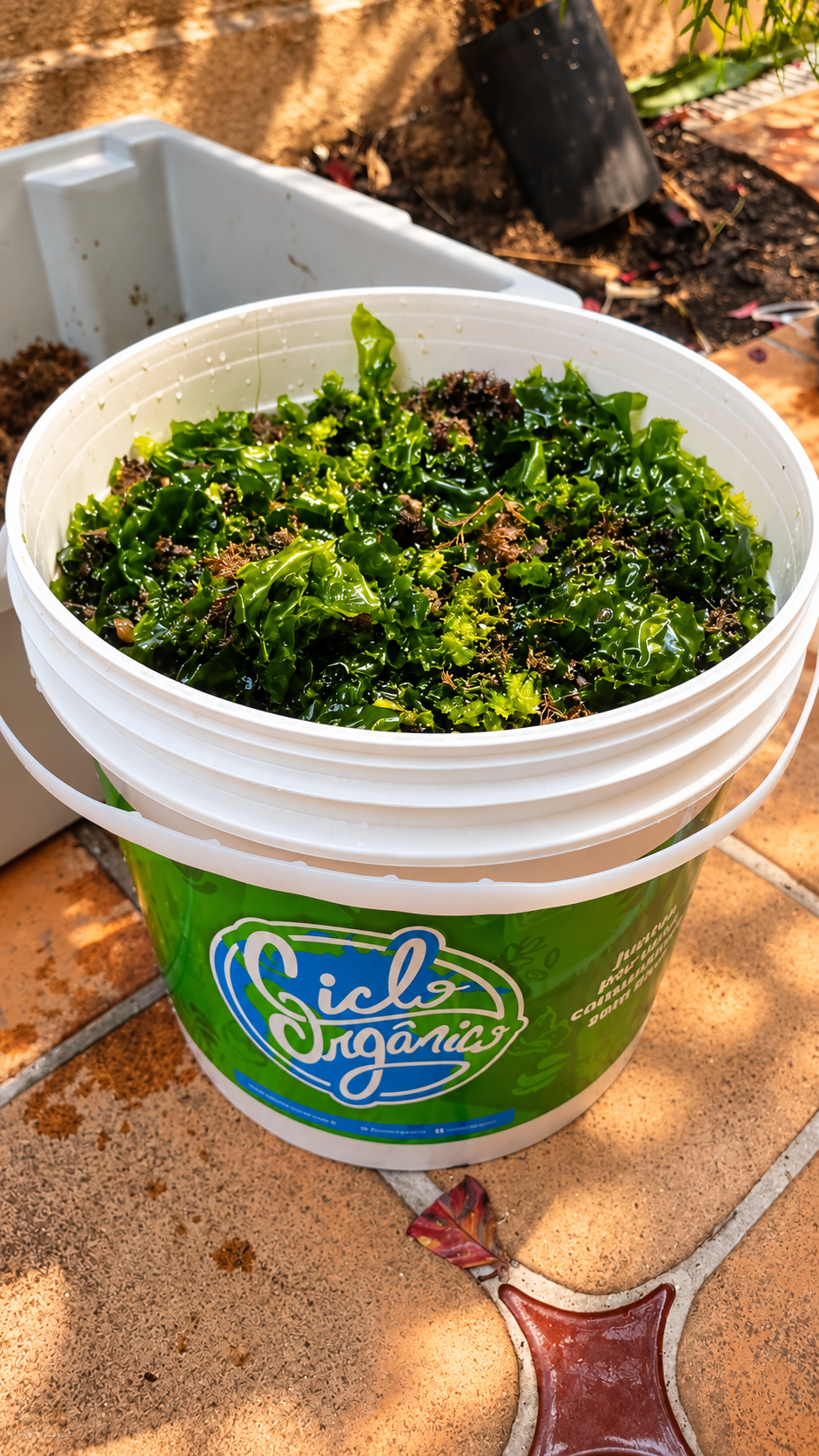
The biomass produced by the Caravela did not end its journey at Praia Vermelha.
After collection and the separation of material destined for scientific analyses, the remaining organic biomass was sent to Ciclo Orgânico, the partner responsible
for directing it to composting.
FROM MARINE BIOMASS
TO THE CYCLE OF THE EARTH.
Through composting, organic materials can be transformed into compost used to enrich soils, gardens, and other projects.
A connection between caring for water
and giving resources new value on land.
BIOMASS → COMPOSTING → ORGANIC COMPOST
NEW POSSIBILITIES, NEW DISCOVERIES.
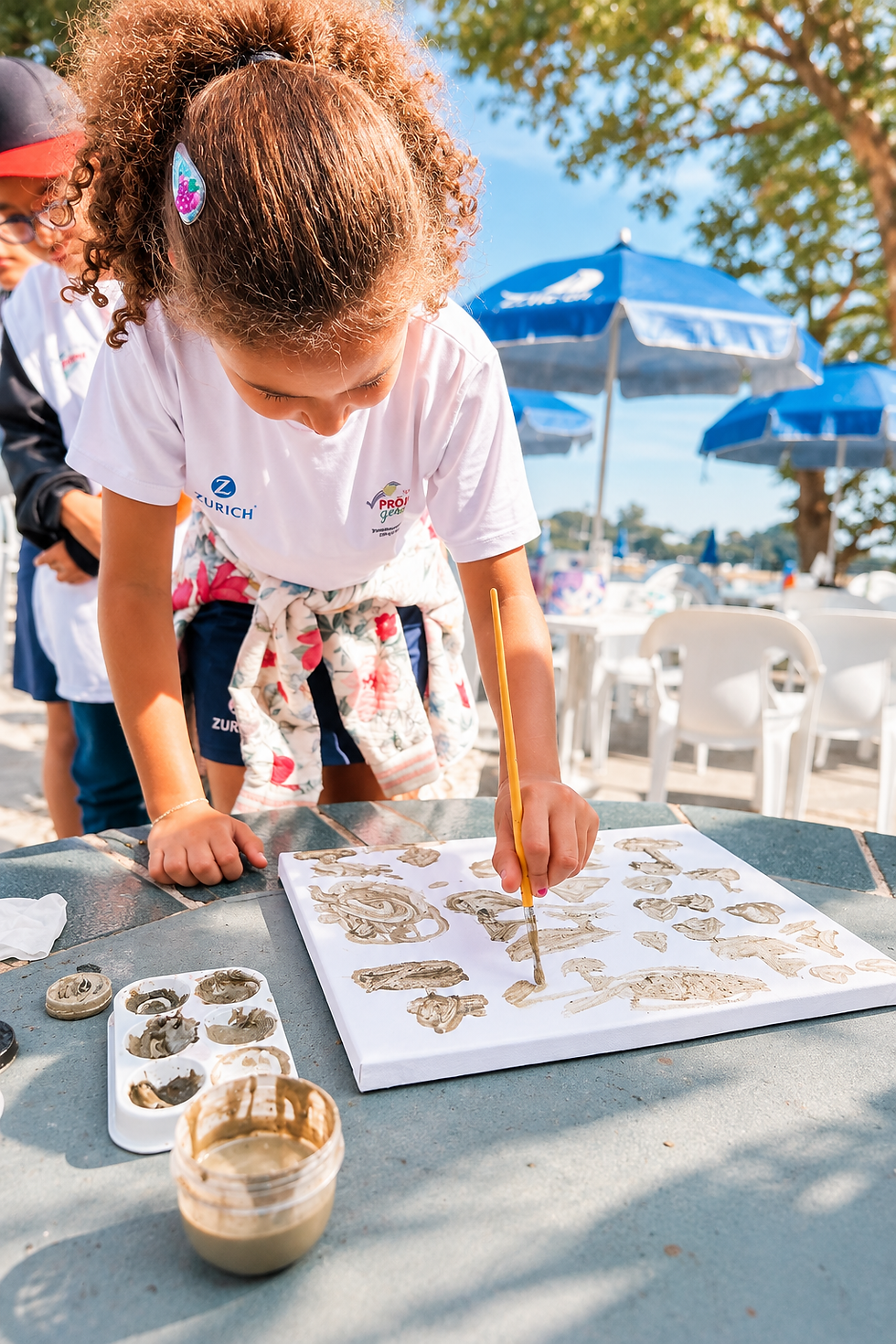
A small portion of the algae was also used by the Infinito Mare team in experiments to extract natural pigments.
An exploration of how biomass can find new applications in educational, cultural, and environmental awareness activities.

CARING FOR WATER
CAN CONTINUE FAR BEYOND IT.
FROM PRAIA VERMELHA
TO THE GLOBAL CLIMATE CONVERSATION
VISIBILITY & ENGAGEMENT
As Brazil hosted COP30,
the Caravela's experience at Praia Vermelha
gained national and international media attention.
Water regeneration, biodiversity,
and the role of nature-based solutions
became part of a broader conversation
about climate, cities, and the future.
OVER 8 MILLION PEOPLE REACHED
through the project's communications


FEATURED COVERAGE
TV FEATURE
PEQUENAS EMPRESAS & GRANDES NEGÓCIOS
TV Globo
CONNECTED IMPACT
ONE TERRITORY.
MULTIPLE DIMENSIONS
OF IMPACT.
The Praia Vermelha operation brought together
water regeneration, biodiversity, climate,
science, education, and innovation.
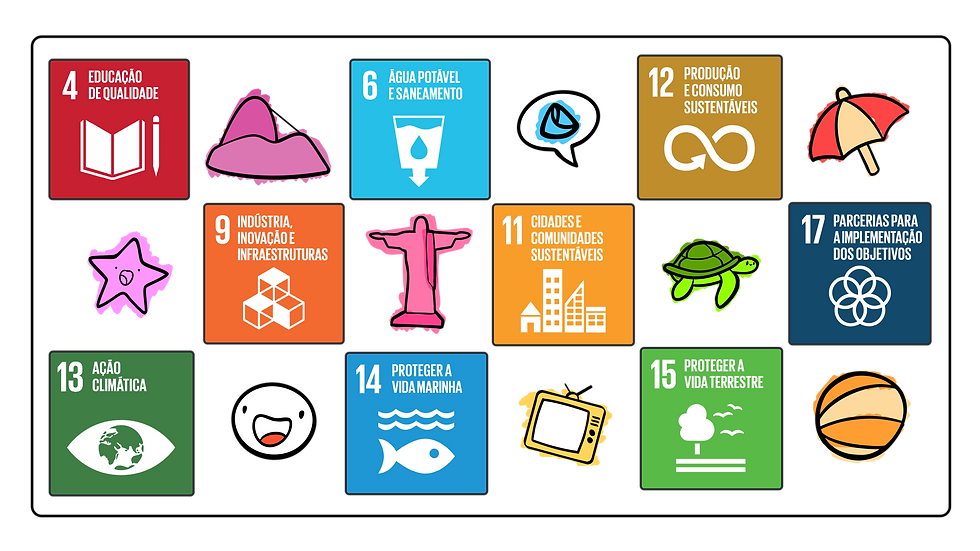
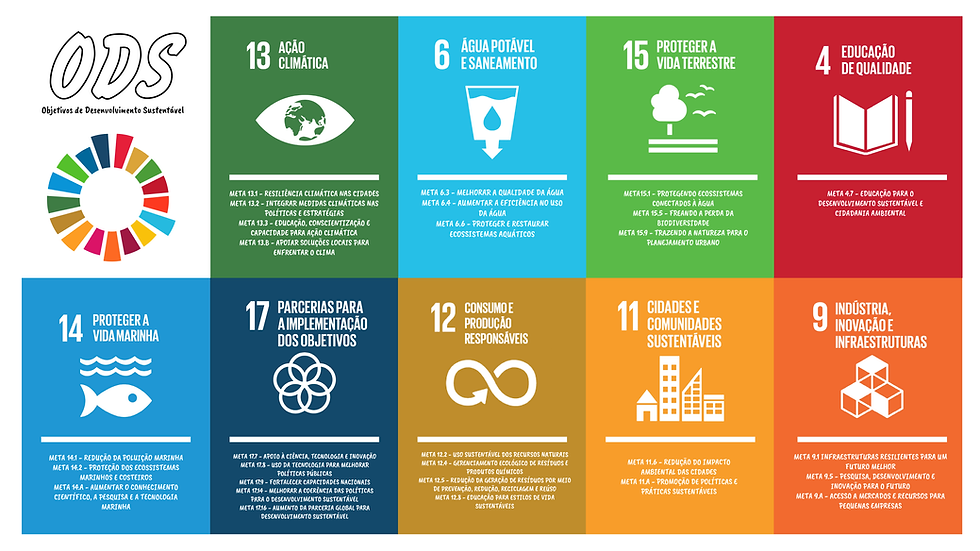
These interconnected efforts aligned the project
with several Sustainable Development Goals (SDGs),
demonstrating how an operation in a marine environment can generate impacts across different dimensions of the 2030 Agenda.
COMMUNITY & TERRITORY
ONE CARAVELA AT SEA.
MANY WAYS
TO CONNECT.
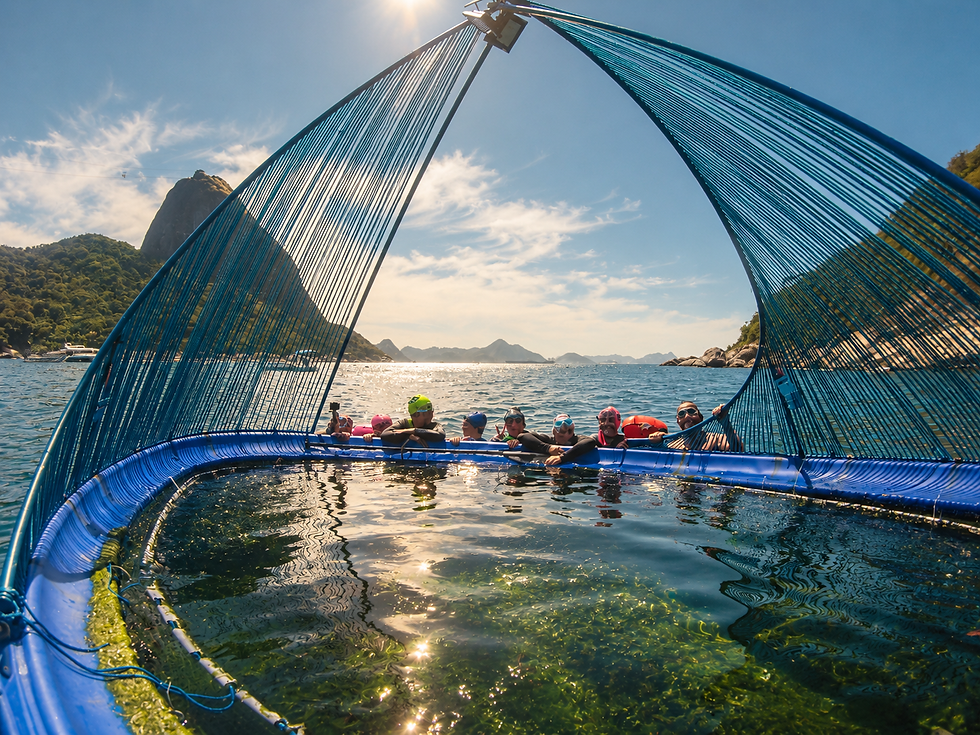
At Praia Vermelha, the Caravela became part of a landscape experienced every day.
Beachgoers, swimmers, divers, residents, and tourists share this territory, each with their own relationship with the sea.
Between swims, open-water crossings, walks, and quiet moments of contemplation, the presence of a blue structure on the water also sparked curiosity.
WHAT IS THAT?
WHAT'S HAPPENING OUT THERE?
Questions that open up conversations about water quality, biodiversity, and the possibilities of marine regeneration.
In a place where so many people come to experience the sea, the Caravela offered a new way of looking at it.
Not simply as a landscape or a place for recreation,
but as a living ecosystem that also needs attention and care.
WHEN SCIENCE BECOMES PART
OF PUBLIC SPACE,
CARE CAN BECOME A CONVERSATION.
THE OPERATION ENDED.
LIFE
KEPT
MOVING.
Praia Vermelha showed that a single Caravela can play different roles within the same territory.
A surface for life.
A technology for regeneration.
A tool for reading the water.
A space for learning.
Between the city and the ocean, each collection revealed a little more about these waters.
And showed that, even in one of Brazil's most iconic landscapes,there is still so much to discover.