
RESULTS
Belo Horizonte (MG)
LAGOA DA
PAMPULHA
April – July 2025 · 4 Caravelas · 90 days of operation
A NOTE ON THE DATA
The results presented on this page reflect the most recent consolidation of operational data. As new analyses are completed and the dataset is updated, some indicators may vary from figures shared in previous versions.
Data updated in September 2026.
90 DAYS.
FOUR CARAVELAS.
ONE LAKE
FULL OF ANSWERS.
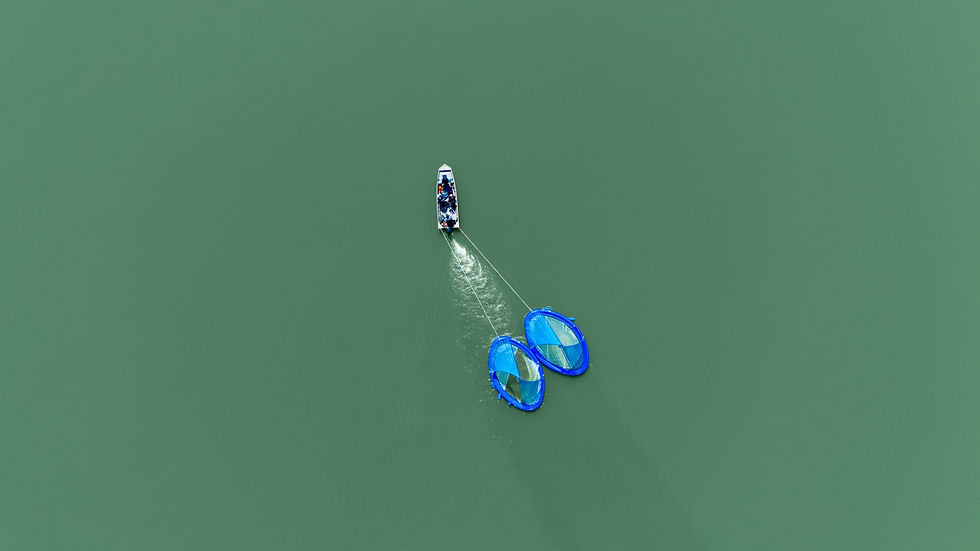
For three months, four Caravelas
operated simultaneously at different points
across Lagoa da Pampulha.
The operation combined ecological regeneration,
environmental characterization, research, education,
and engagement around one of Belo Horizonte’s
most iconic bodies of water.
These are some of the results from that experience.
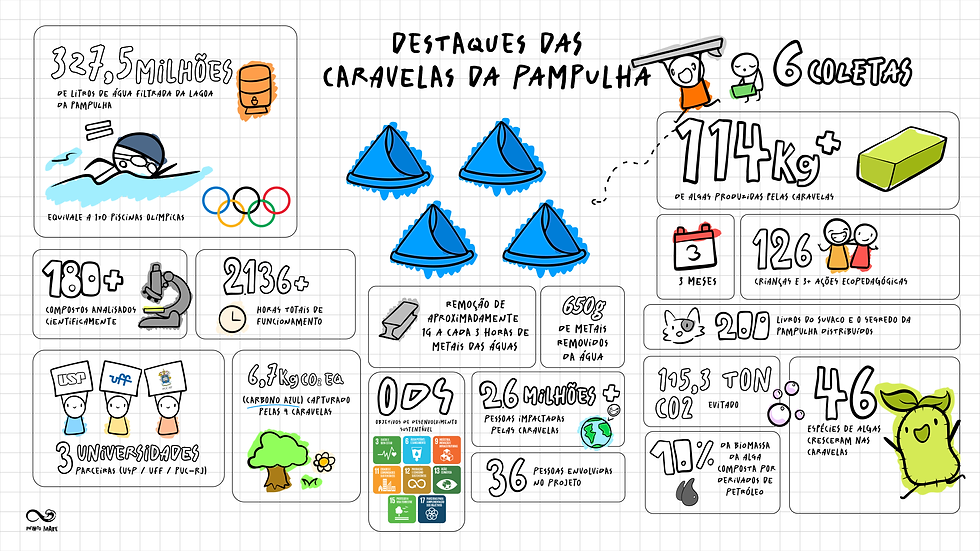
RESULTS AT A GLANCE
THE NUMBERS TELL
PART OF THE STORY.
BIOREMEDIATION
WHAT WAS IN THE WATER
BECAME PART
OF THE BIOMASS.

* Values represent the relationship between the concentrations identified in the biomass and the reference values used in the analysis. They do not represent concentrations measured directly in the water.
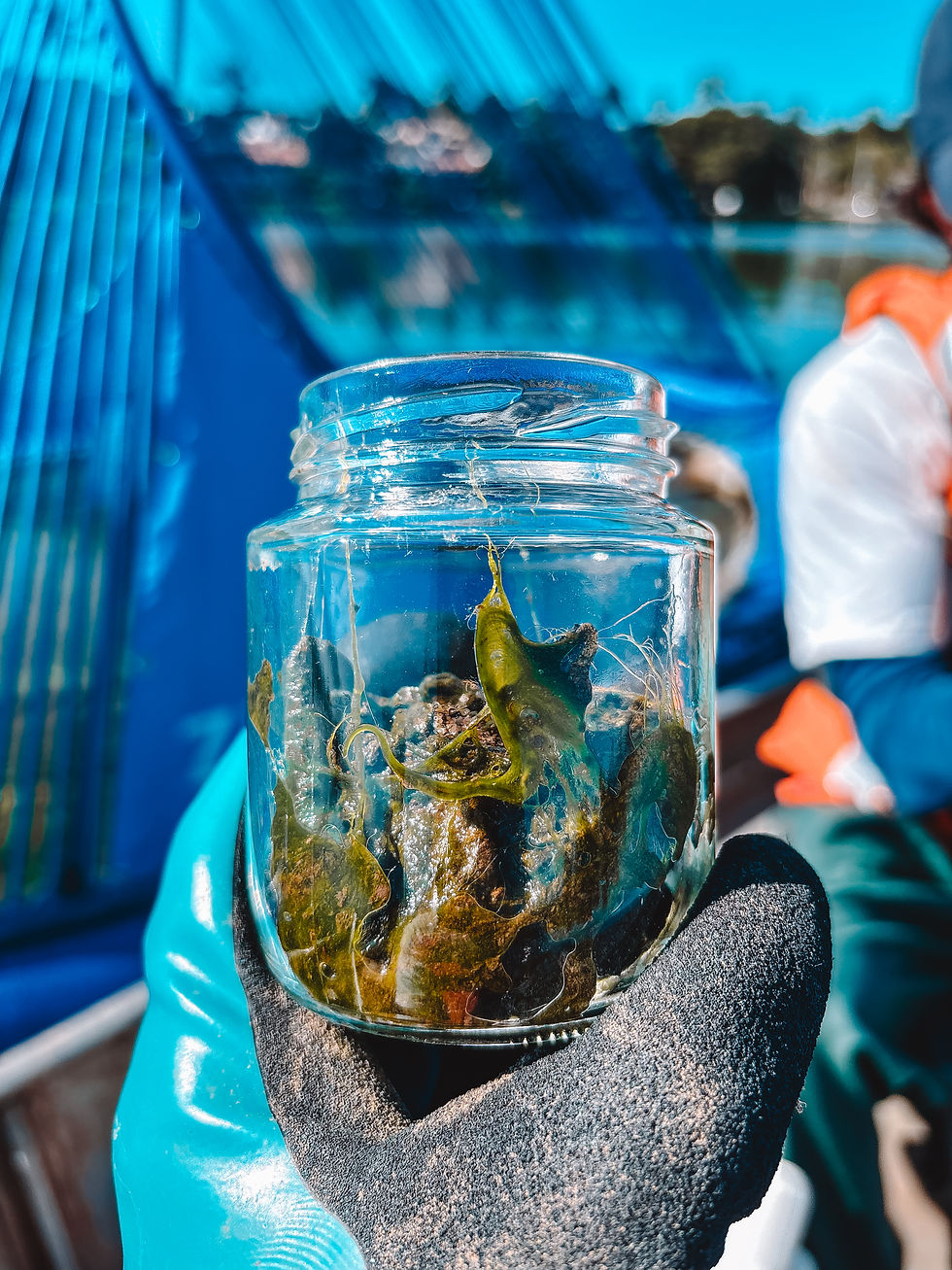
The Caravela promotes the growth of biomass from native organisms already present in the ecosystem.
During this process, elements present in the water can be incorporated into or retained by the biomass, including within its mucilage matrix.
When the biomass is harvested and removed from the system, some of these retained elements are also removed from the water.
This is one of the ways the Caravela contributes to ecosystem bioremediation.

THROUGHOUT THE SAMPLING
IT WASN’T JUST
A SNAPSHOT.
WE FOLLOWED
THE PROCESS.
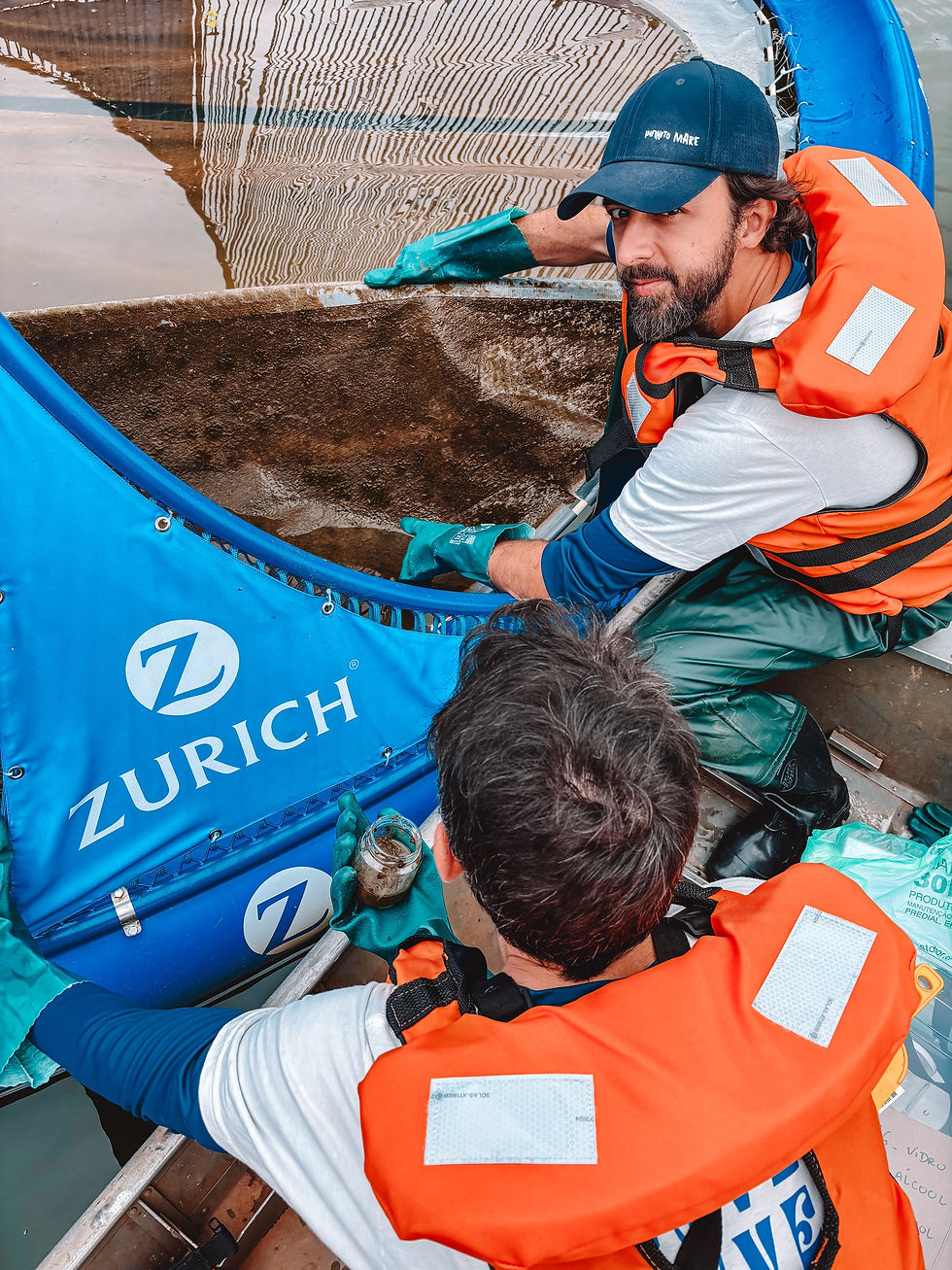
Throughout the sampling, we followed a continuous process:
elements present in the water were retained by the biomass
and, as the biomass was removed, were also removed from Lagoa da Pampulha.

(As)
(Co)
(Fe)
(La)
(Mn)
(Pb)
WHAT THE BIOMASS REVEALED
RARE EARTH ELEMENTS
AMONG THE ELEMENTS, AN UNEXPECTED
FINDING.
Biomass analyses also identified the presence of rare earth elements, a group of chemical elements used in a range of technological and industrial applications.
Among them was lanthanum.
At Pampulha, its presence carries particular significance.
The lake had previously received applications of a technology based on lanthanum-modified bentonite, originally developed in Australia to help control phosphorus in aquatic environments.
When identified in the Caravelas’ biomass, lanthanum revealed another capability of the technology: retaining and removing from the system elements linked to the environmental history of that territory.

LANTHANUM IDENTIFIED IN THE BIOMASS
and removed from the lake through biomass harvesting 3,850,000× above the Australian regulatory reference value
BIODIVERSITY
LIFE
RESPONDED TOO.
Throughout the operation,
the Caravela’s structure became a surface
for a diverse biological community to develop.
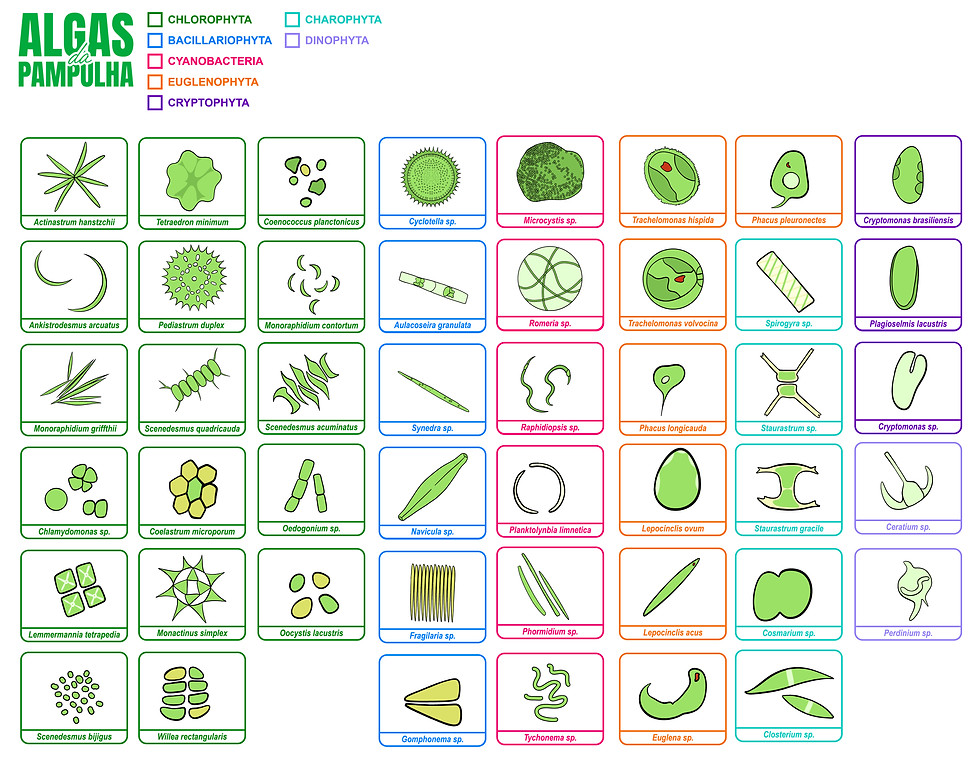
7 PHYLA · 46 SPECIES
recorded on the Caravelas
7 PHYLA · 26 SPECIES
recorded in water samples from the lake
EDUCATION & PERCEPTION
THE LAKE ALSO
BECAME
A PLACE FOR
LEARNING.

126 CHILDREN AND YOUNG PEOPLE took part in the environmental education activities
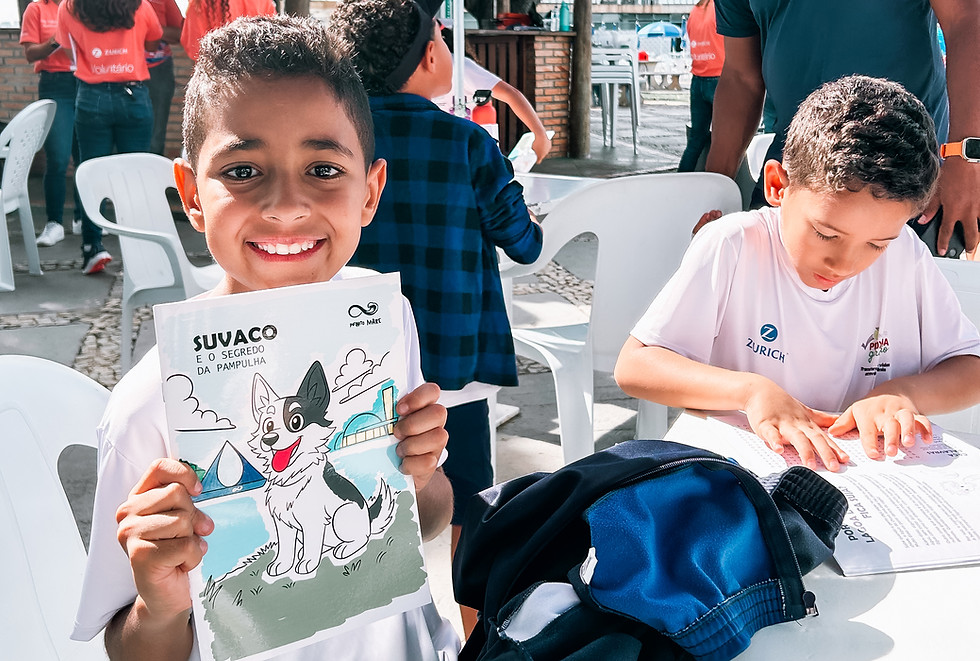
200 BOOKS
Suvaco e o Segredo da Pampulha distributed
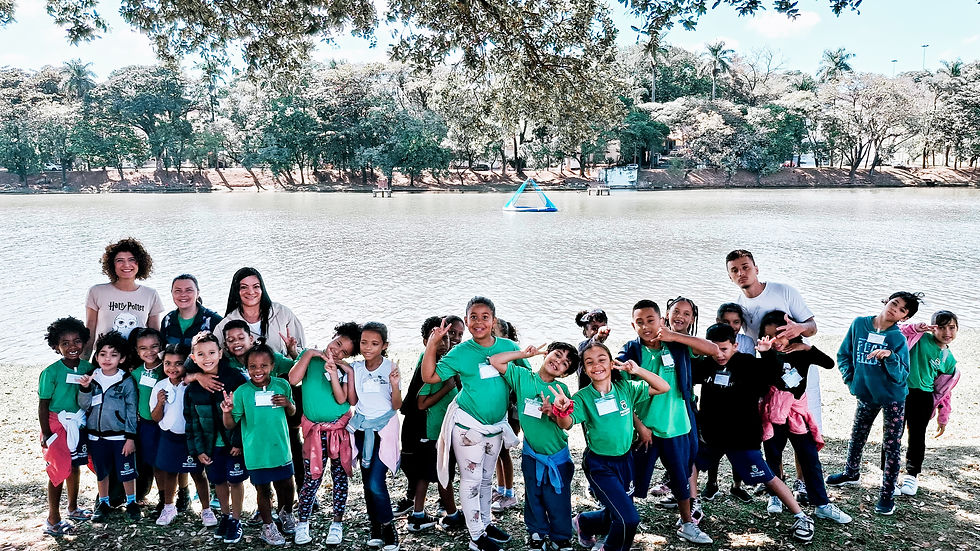


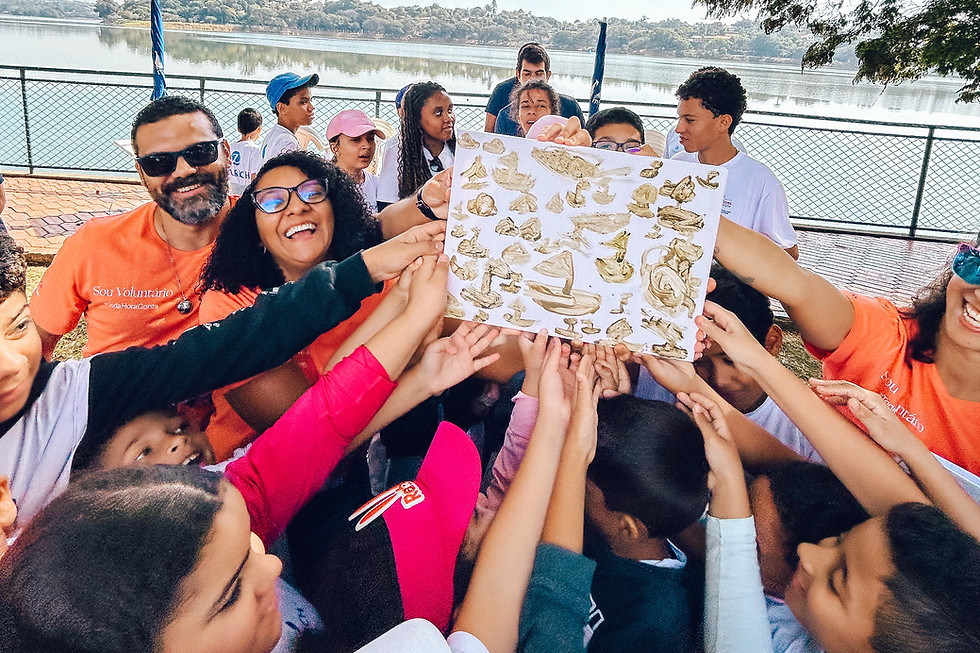


During the environmental education activities, children and young people
were invited to observe Lagoa da Pampulha, learn about its ecological processes, and share their perceptions of the territory.
A survey conducted before and after the experience allowed us to track changes in how participants perceived the lake, its environmental condition, and its possible futures.
WHAT CHANGED IN THE WAY THEY SAW THE LAKE?
+20.4 PERCENTAGE POINTS
in children’s perception of the lake as clean
after the experience
90.5% OF CHILDREN
associated positive feelings with Lagoa da Pampulha after the activity
100% OF CHILDREN AND TEENAGERS
imagined or represented
a hopeful future for the lake


CIRCULARITY
FROM WATER
TO A NEW CYCLE.
114 KG OF BIOMASS
produced during the operation
The biomass harvested from the Caravelas also opened new pathways for exploring alternative uses for the material.
In partnership with Cerâmica Del Favero, part of the biomass was incorporated into clay at proportions ranging from 3.5% to 5% and transformed into ceramic material.
FROM BIOMASS
TO CERAMICS.
The process allowed us to explore a new pathway for the material removed from the water, with contaminants immobilized within the ceramic matrix.

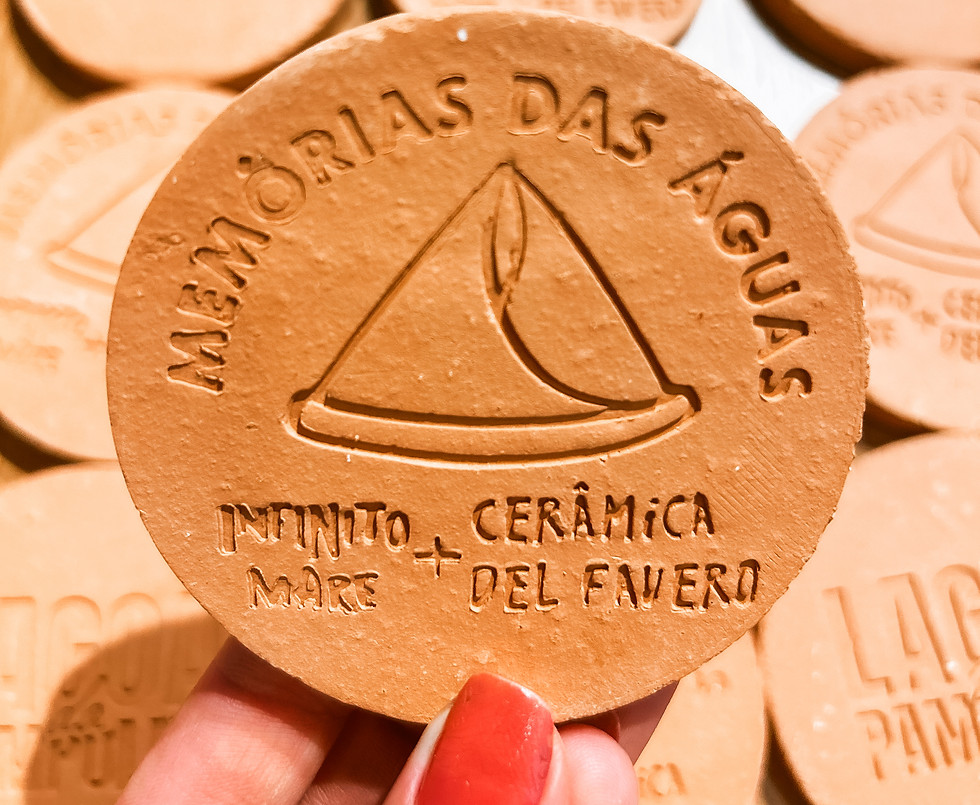

BIOMASS → CLAY + BIOMASS → FIRING → CERAMICS

WHAT CAME OUT OF THE WATER
BECAME PART OF A NEW CYCLE.
VISIBILITY & ENGAGEMENT
WHEN WATER BECOMES VISIBLE,
CARING FOR IT
BECOMES PART OF THE CONVERSATION.

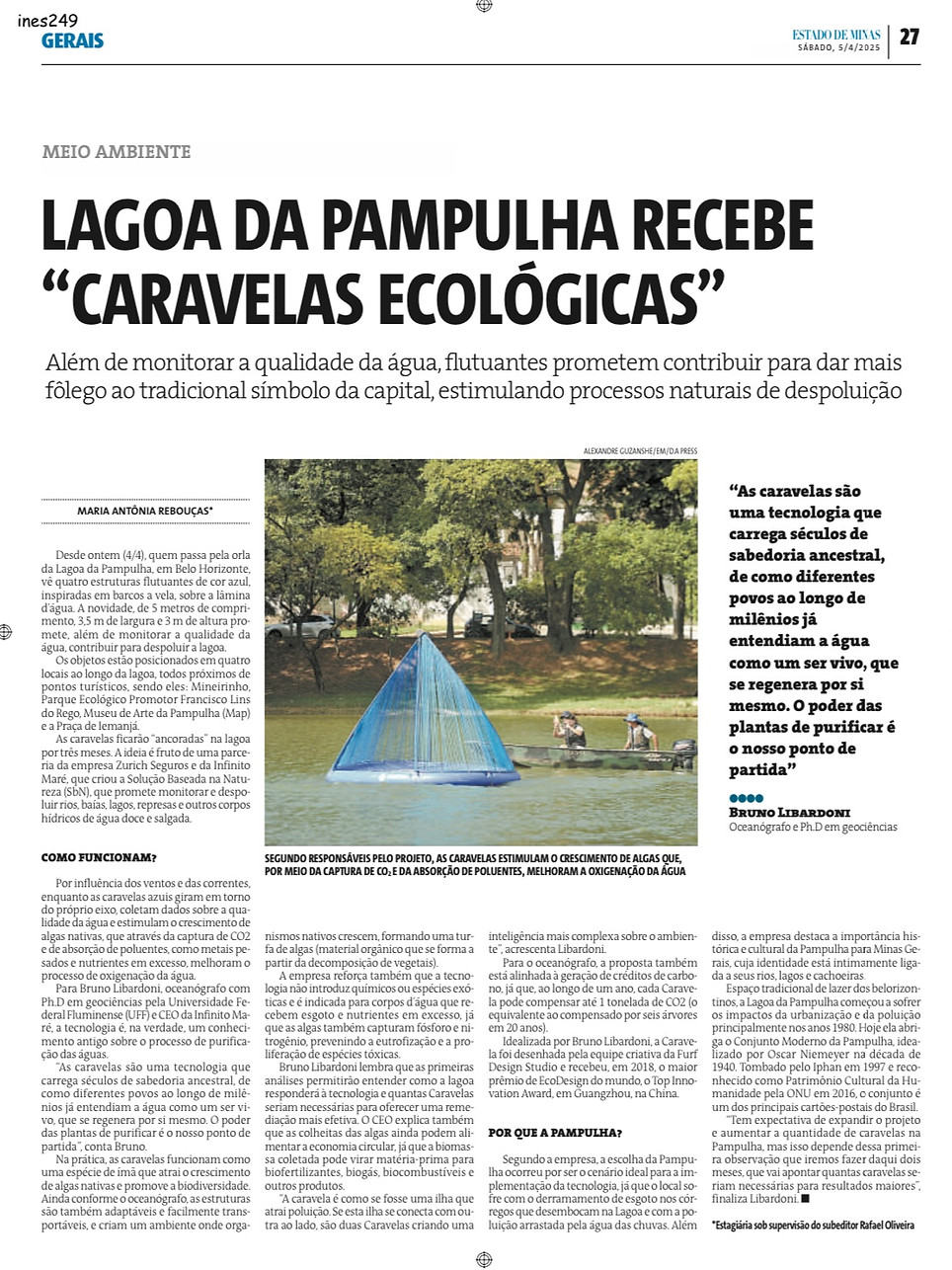

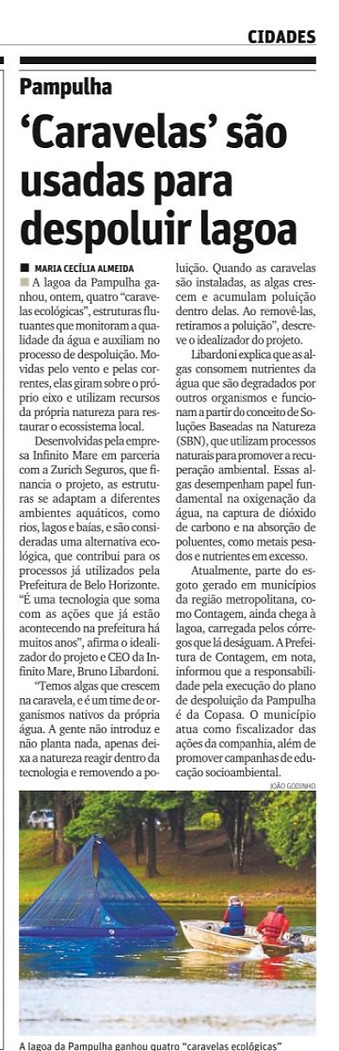
The presence of the Caravelas at Pampulha also brought the conversation around water regeneration, science, and nature-based solutions beyond the shores of the lake.
2.6+ MILLION PEOPLE REACHED
through project communications
22 MEDIA FEATURES
across television, press, and digital channels
CONNECTED IMPACT
ONE TERRITORY.
MULTIPLE DIMENSIONS
OF IMPACT.
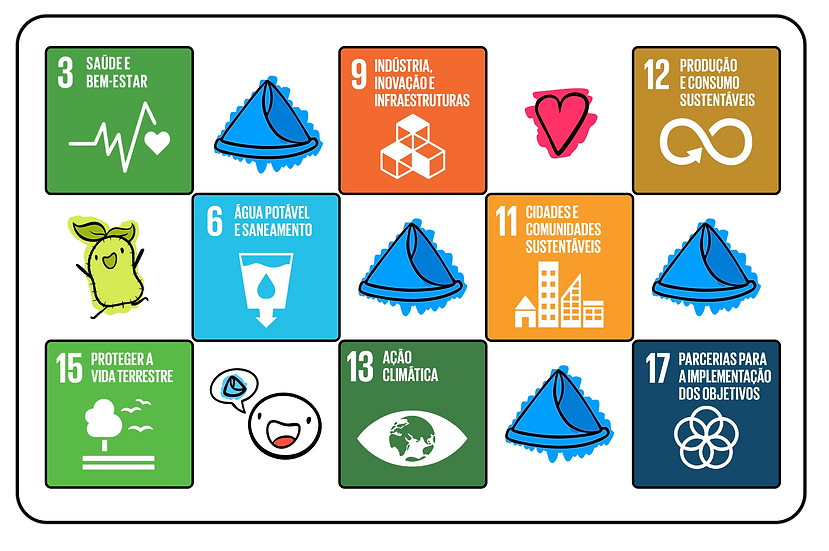
The operation at Lagoa da Pampulha generated results across water, climate, innovation, education,
circularity, and collaborative networks.
Together, these different dimensions connected the project
to multiple Sustainable Development Goals,
showing how a single operation can contribute
across different dimensions of the 2030 Agenda.
THE OPERATION HAS ENDED.
THE LEARNING CONTINUES.
Pampulha showed us that a single operation
can generate results across different layers.
In the water.
In biodiversity.
In science.
In people.
Each sampling cycle deepened our understanding
of the lake.
Each finding opened up new questions.
And each encounter helped shape
a new way of seeing that water.
